The company and program
| Client | A Series A restaurant POS software company. |
| Stage | Series A |
| Industry | SMB vertical SaaS: restaurant point of sale |
| Timeline | One 90-day growth sprint, June 15 – September 13, 2026. Cancellations read through October 13 |
| Channels | Signup and contract flow, merchant dashboard, POS app, SMS, email, onboarding calls |
| Team | A dedicated Kiko growth lead plus agents for event audits, funnel pulls, cohort reports and first drafts of SMS and email copy. Client side: six onboarding specialists, two engineers and the payments operations lead |
The approach
A location goes live when it takes its first live card payment through the POS. Every result compares locations signed in sprint weeks 8–13 with locations signed in March–May. The menu import also ran as a 50/50 test in weeks 3–4.
| Test | Hypothesis | Comparison | Decision rule |
|---|---|---|---|
| Menu import | Typing a 120-item menu by hand is the longest step and the one owners put off | Owner uploads a photo or PDF of the menu or links a delivery-app listing; AI parses it and a specialist checks it, vs. building the menu by hand | Ship if median days to menu built falls by 2 or more, with first-week support tickets per location flat |
| Payments paperwork at signing | Payments approval waits on documents nobody asked for at signing | Business verification documents collected inside the contract flow, vs. requested by email after signing | Same rule, on days to payments approved |
| Hardware on contract day | Hardware waits on a finished menu for no reason | Hardware ships the day the contract is signed, vs. after the menu is complete | Same rule, on days to hardware delivered |
| Go-live date and day-10 rescue | A date picked at signing gives the owner a deadline, and a call on day 10 saves the stragglers | Go-live date chosen at signing, SMS checklist and a specialist call on day 10 for locations not yet live, vs. ad hoc follow-up | Keep if go-live within 14 days rises with specialist hours per location flat or down |
What we changed
- Weeks 1–2: audit and baseline. Seven milestones mapped from contract to first live payment on the March–May cohort. Menu build and payments approval each had a median of 6 days, and both started late.
- Weeks 3–4: menu import. The 50/50 test cut the median to 1 day, and it shipped to every new location in week 5.
- Week 5: payments paperwork at signing. Verification documents moved into the contract flow.
- Week 6: hardware on contract day. Shipping no longer waited on the menu.
- Week 7: go-live date and day-10 rescue. Owners picked a date at signing, got an SMS checklist and a call on day 10 if they weren't live.
- Weeks 8–13: hold and measure. No new changes. Each signing cohort read at 14 and 30 days; sprint review at day 90.
The results
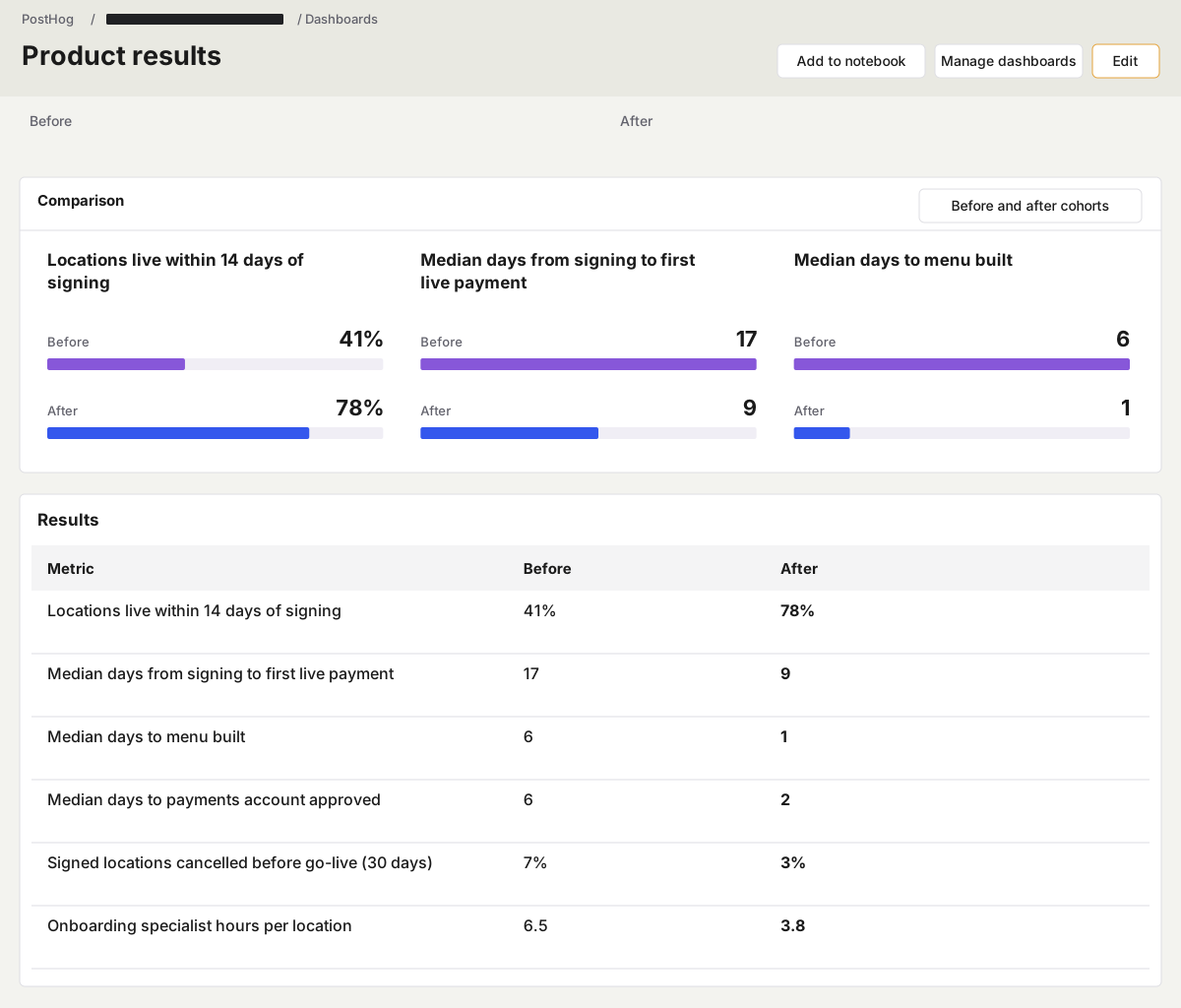
Before: 486 locations signed in March–May 2026. After: 268 locations signed in sprint weeks 8–13 (August 3 – September 13).
| Metric | Before | After | Change |
|---|---|---|---|
| Locations live within 14 days of signing | 41% | 78% | +37 pts |
| Median days from signing to first live payment | 17 | 9 | −8 days |
| Median days to menu built | 6 | 1 | −5 days |
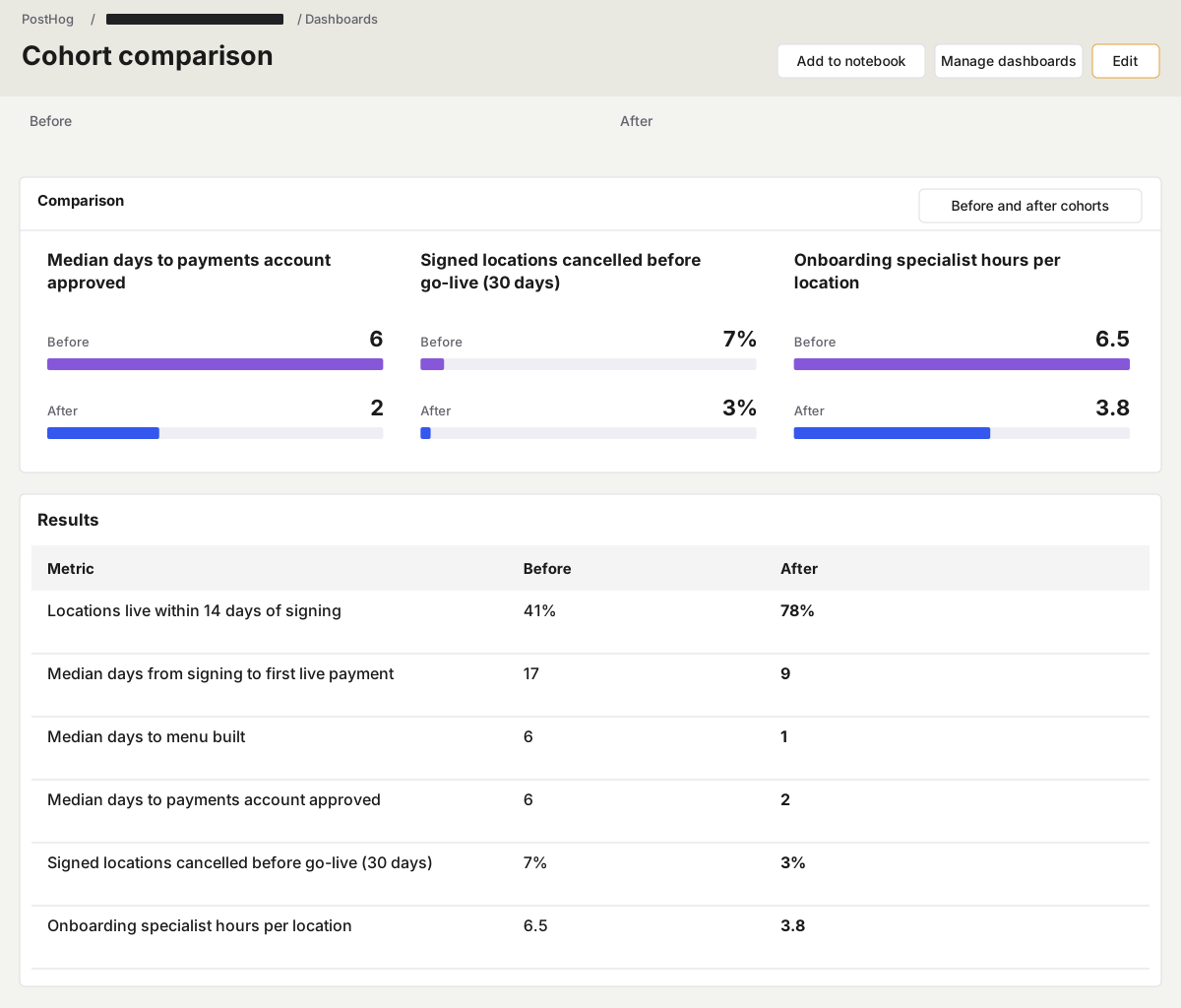
| Median days to payments account approved | 6 | 2 | −4 days |
| Signed locations cancelled before go-live (30 days) | 7% | 3% | −4 pts |
| Onboarding specialist hours per location | 6.5 | 3.8 | −2.7 hours (−42%) |
What didn't work
- AI parsing on handwritten menus. About 1 in 8 menus were handwritten or chalkboard photos the parser couldn't read. Specialists rebuilt those by hand.
- A self-serve staff setup video. Owners still asked for a call, and staff setup is still the slowest step at a median of 5 days.
- Multi-location groups. 3 of the 11 groups signed in weeks 8–13 missed 14 days, because every site needed its own menu changes. They need their own onboarding plan.
What we learned
- Run onboarding steps side by side. Nothing about hardware or payments needed a finished menu.
- Ask for every document at signing, when the owner is most motivated.
- Give owners a go-live date and hold specialists to it. Specialist hours fell even as more locations went live.
Frequently asked questions
How much does an onboarding sprint for SMB software cost?
Kiko's 90-day sprints start at $10,000 a month, and this one used no media. Specialist hours per location fell from 6.5 to 3.8, so the client's own onboarding cost dropped while more locations went live.
How long did it take for go-live rates to change?
The menu import test ran in weeks 3–4 and cut median menu build from 6 days to 1. All four changes were live by week 7, and locations signed in weeks 8–13 were read at 14 and 30 days.
Would this work for a seed-stage salon or gym software company?
Yes, if your onboarding has steps that wait on each other for no reason. The menu import is restaurant-specific, but paperwork at signing, hardware on contract day and a go-live date fit any vertical SaaS with payments.
Related case studies and guides
Same industry, other angles:
- Creator marketing: 640 paid accounts in 12 weeks from trade YouTubers
- Paid ads: Cost per paid account down from $410 to $236 on Meta in 10 weeks
- Full growth system: grew paying contractors from 1,100 to 4,300 in 9 months