The company and program
| Fact | Detail |
|---|---|
| Client | A seed-stage field-service software company for HVAC and plumbing contractors: scheduling, dispatch, quotes and invoicing. |
| Stage | Seed |
| Industry | SMB vertical SaaS |
| Timeline | 12 weeks, April 6 – June 28, 2026 |
| Channels | YouTube integrations and dedicated videos; YouTube ads on creator videos |
| Team | 1 dedicated Kiko growth lead, plus agents for creator sourcing, brief review and daily reporting |
The approach
- Hypothesis: Contractors trust a working tech more than an ad. A trade YouTuber who runs a real service day in the software sells it better than a sit-down review.
- Comparison: "Day in the van" videos, with real jobs dispatched and invoiced in the app, against sit-down software reviews. On paid, creator videos run as YouTube ads against the company's Google search ads at $420 per paid account.
- Decision rule: Each video got 7 days of organic data. YouTube ads went behind videos above 25% trial-to-paid on their own link, and each ad concept got $500–$1,000 or 7 days. Creators under $160 per paid account were rebooked.
What we changed
- Weeks 1–2: shortlist and real accounts. We reviewed 85 trade channels against Kiko's creator-fit rubric, contacted 24 and signed 10: 5 HVAC, 4 plumbing and 1 trade-business owner. They included plumbing education channels for working plumbers and HVAC troubleshooting channels for technicians. Each creator's account was loaded with their own price book and customer list.
- Week 3: first 8 videos go live. Five "day in the van" videos and three sit-down reviews, each with its own link and trial code.
- Week 4: read the first week. "Day in the van" videos converted trials to paid at 36%, against 24% for reviews. Every later video used that format.
- Weeks 5–8: amplify and add. The 4 best videos ran as YouTube ads aimed at contractor audiences, with 90 days of paid usage in each base fee. Two more creators posted.
- Weeks 9–12: rebook. The 4 creators under $160 per paid account made a second video on invoicing and seasonal maintenance agreements.
The results
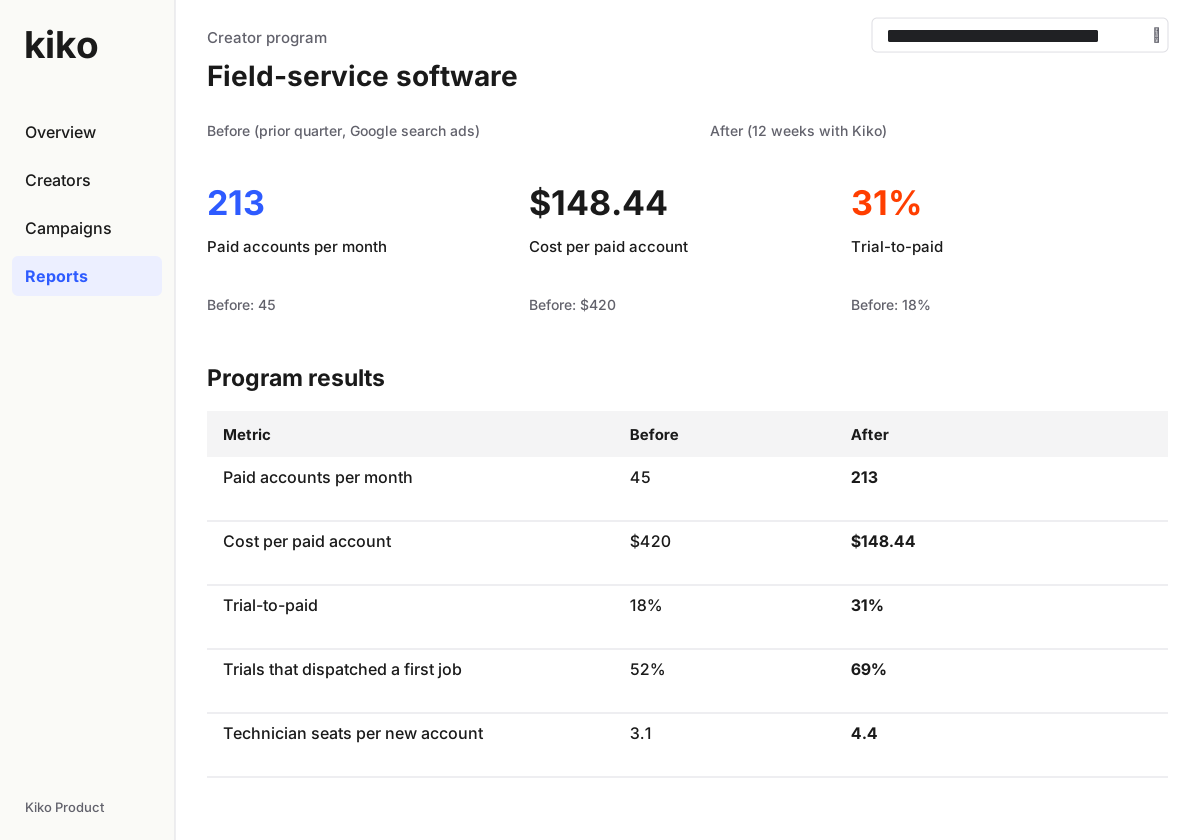
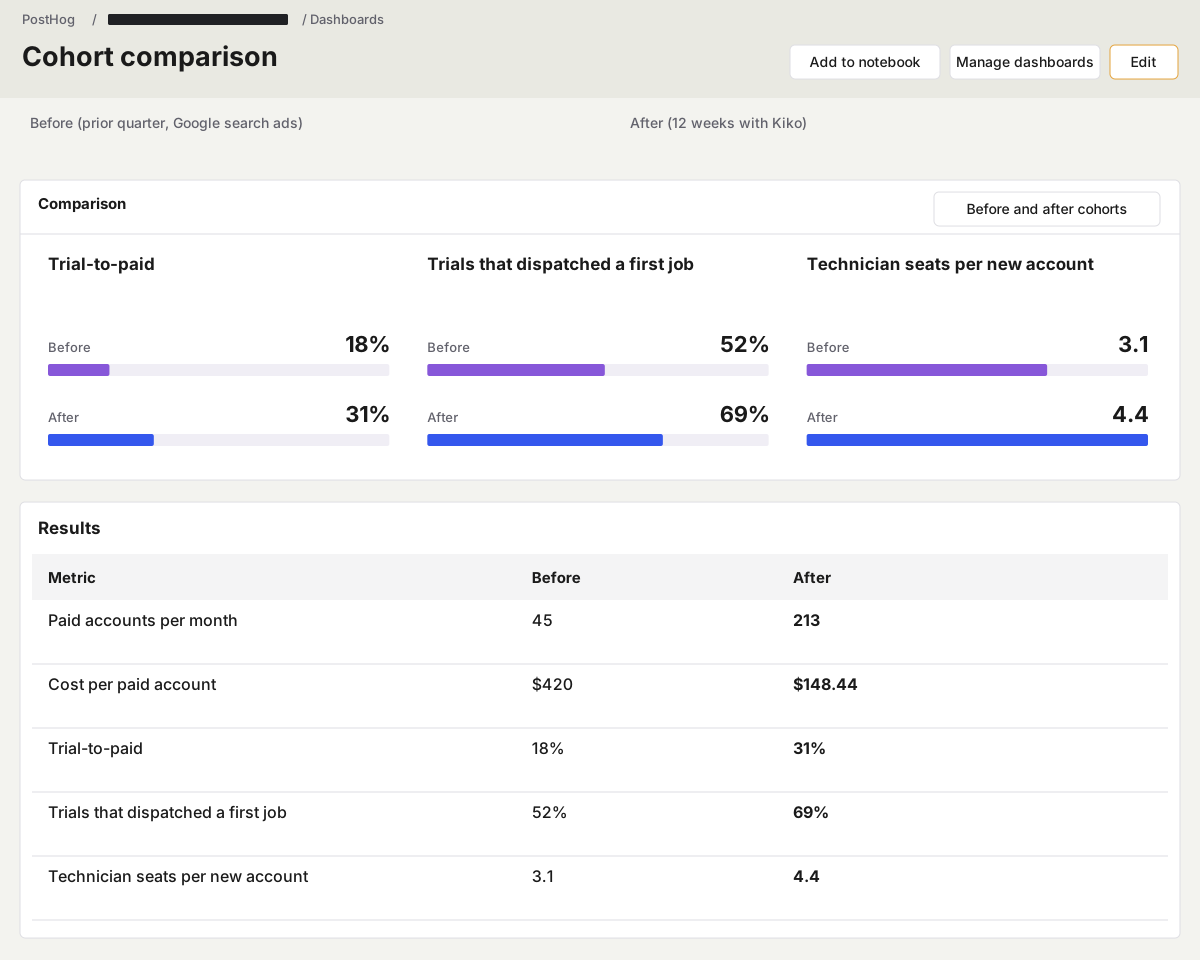
| Metric | Before (prior quarter, Google search ads) | After (12 weeks with Kiko) | Change |
|---|---|---|---|
| Paid accounts per month | 45 | 213 | 4.7x |
| Cost per paid account | $420 | $148.44 | −65% |
| Trial-to-paid | 18% | 31% | +13 pts |
| Trials that dispatched a first job | 52% | 69% | +17 pts |
| Technician seats per new account | 3.1 | 4.4 | +1.3 seats |
What didn't work
- Sit-down reviews. The three review videos converted at 24% and cost more per paid account than any "day in the van" video. None was rebooked.
- Peak season slowed posting. The June HVAC rush kept two HVAC creators on service calls, and their videos slipped 2 weeks. Book HVAC creators for spring and autumn, not the first heat wave.
- Plumbing channels reach homeowners too. About 1 in 5 trials from plumbing videos came from homeowners, not contractors. We added "number of technicians" to the trial form to filter them out.
What we learned
- Film a real service day in the software, not a screen tour.
- Load each creator's account with their own price book before filming.
- Put YouTube ad spend only behind videos that beat the trial-to-paid bar on organic data.
Frequently asked questions
How much does creator marketing cost for vertical SaaS?
Here, $148.44 per paid account in creator fees and YouTube ads, against $420 on Google search ads. Most seed programs like this run $15,000–$35,000 a month in creator fees and media.
How long until trade YouTubers produce paid accounts?
The first 8 videos went live in week 3 and the first read came in week 4. Ads started in week 5. Over the 12 weeks, the company went from 45 to 213 paid accounts a month.
Would this work for a Series A restaurant POS company?
The format transfers: a working operator running real jobs in the software on camera. The channels don't, since trade YouTube is specific to HVAC and plumbing. For restaurants, the POS onboarding study below is the closer read.
Related case studies and guides
Same industry, other angles:
- Paid ads: Cost per paid account down from $410 to $236 on Meta in 10 weeks
- Product growth: Go-live within 14 days up from 41% to 78%
- Full growth system: grew paying contractors from 1,100 to 4,300 in 9 months
More on SMB vertical SaaS: