The company and program
| Client | A seed-stage New York experiences marketplace. |
| Stage | Seed |
| Industry | New York startups |
| Pillars | Creator marketing + Paid ads + Product growth |
| Timeline | 6 months (two 90-day sprints), April–September 2026 |
| Channels | NYC creators on TikTok, Instagram and YouTube; Meta and TikTok ads geo-targeted to New York residents; rebooking and lifecycle |
| Team | A dedicated Kiko growth lead plus agents for creator sourcing, claims pre-checks, ad variants, funnel pulls and weekly reporting; in-person shoots in New York; the client's two engineers |
| Headline result | Became the top-grossing app in its category in New York in 6 months |
The approach
| Pillar | Hypothesis | Compared against | Decision rule |
|---|---|---|---|
| Creator marketing | Creators who book and film a real experience end to end bring more first bookers than "things to do this weekend" list posts | Weekend-list accounts with similar reach | After 7 days, rebook creators under $14 per first booker; drop anyone over $25 |
| Paid ads | Creator footage run as Spark Ads and partnership ads to New York residents beats the app's own listing-photo ads | Listing-photo carousel ads, same budget and audience | Each concept gets $500 or 7 days; scale anything under $18 per first booker |
| Product growth | A "book the next one" prompt on the rating screen plus a Thursday weekend drop raises second bookings within 60 days | No prompt and the old generic weekly email | 50/50 split for 6 weeks; ship if second bookings rise 4 points or more at 95% confidence |
How the three pillars connected
Creator marketing
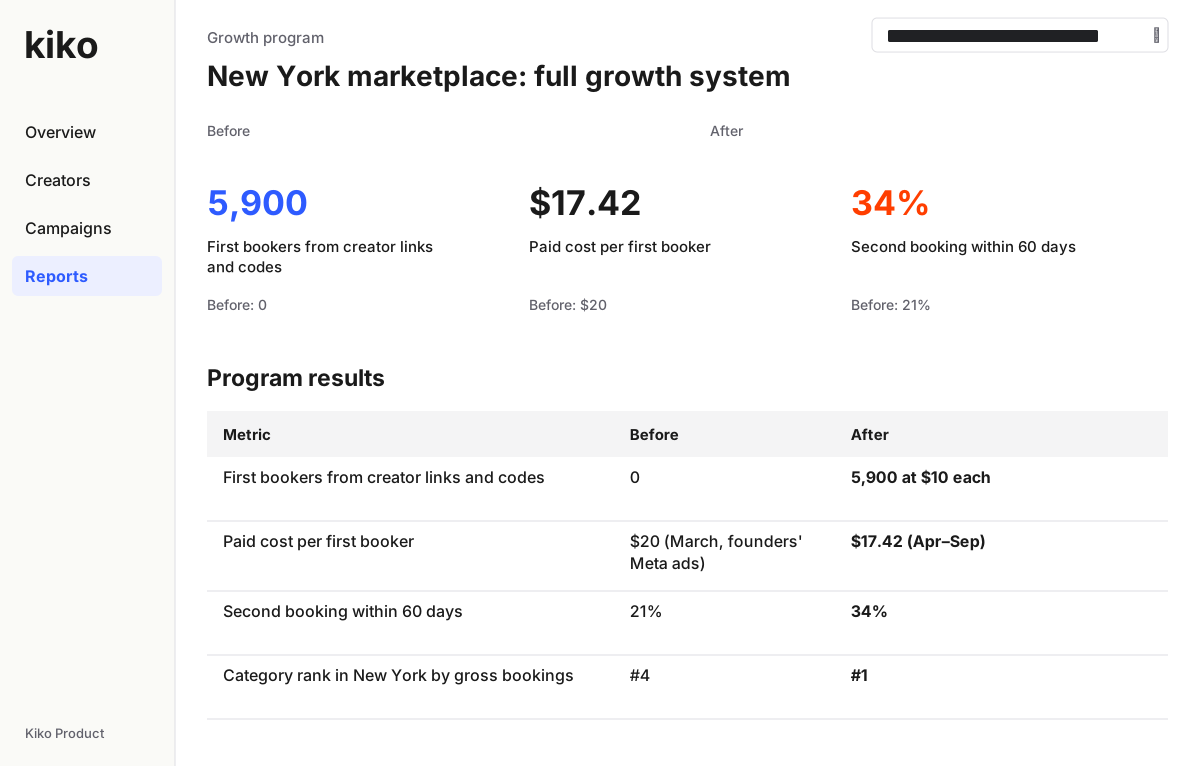
We booked 32 New York creators across food, nightlife and things-to-do content, and each one booked and filmed a real experience through the app. The anchor was a New York street-food and language YouTuber, filming a Flushing food crawl. Most were NYC food and nightlife TikTokers with 50K–400K followers. Kiko ran the shoots in person and checked every post for disclosure. Creator links and codes brought 5,900 first bookers at $10 each.
Paid ads
Media ran from $12,000 to $23,000 a month: Meta at $16 per first booker and TikTok at $20. That is $17.42 per first booker across paid, against $20 on the founders' own Meta ads in March. Creator footage beat listing photos in every round, and targeting people living in New York, not visitors, was the second biggest gain.
Product growth
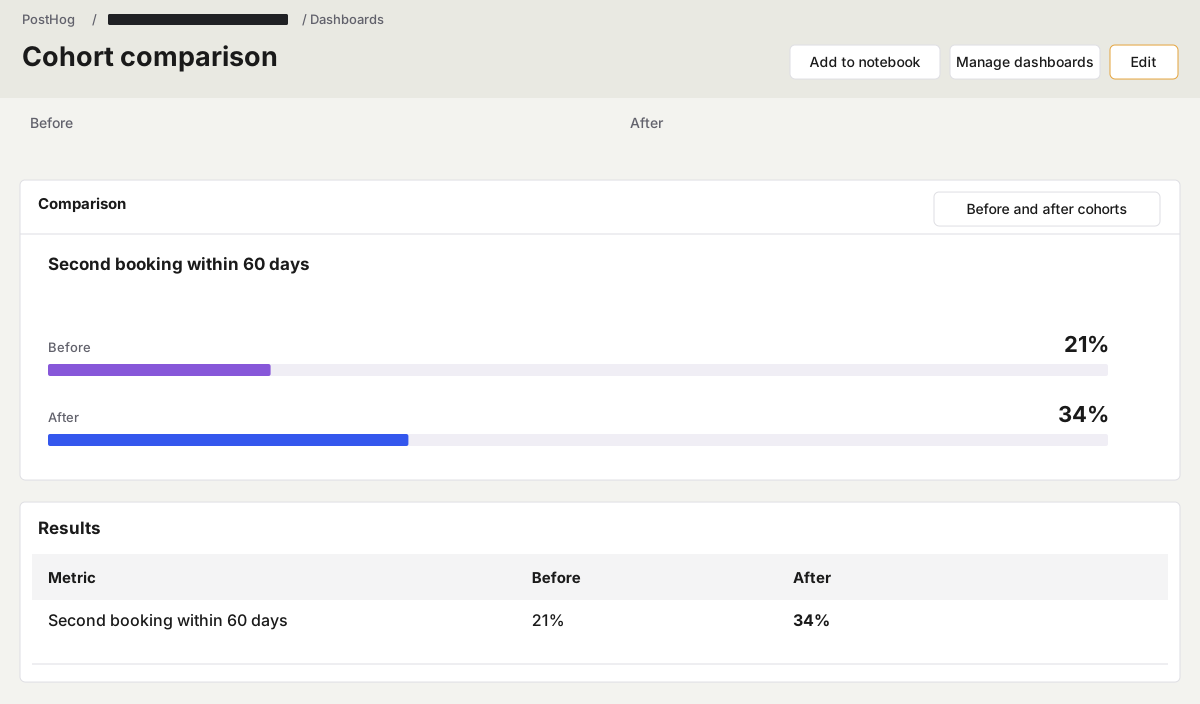
Paid volume showed the problem: first bookers loved the experience (4.8 average rating) but only 21% booked again within 60 days. We added a "book the next one" card to the rating screen, picked by neighborhood and by the host they just met, replaced the generic weekly email with a Thursday 5pm weekend drop, and helped hosts package two-stop bundles. Second bookings within 60 days rose from 21% to 34%.
How they fed each other
Creators showed which experiences sold: food crawls and small-group classes outsold tours three to one, so paid and the weekend drop led with them. The best creator videos became the paid ads, and the paid audience at volume exposed the rebooking gap. Once rebooking improved, each first booker was worth more in the first 60 days, which let us raise paid spend in July and August without lowering the bar for returns. Hosts featured by creators also recruited other hosts, which widened supply in the categories paid was pushing.
What we changed
- Weeks 1–2: tie creator links, codes and ad events to first and repeat bookings. Build the New York residents audience.
- Weeks 2–4: book 12 creators; first videos live in week 3, shot in person in New York.
- Weeks 3–8: test creator footage against listing photos on Meta and TikTok, each concept with $500 or 7 days.
- Weeks 6–12: find the rebooking gap (21% within 60 days), then A/B test the "book the next one" card and Thursday drop; ship in week 12.
- Weeks 14–20 (sprint 2): creators to 32 in total, paid to $20,000 a month, host bundles launched.
- Weeks 21–26: paid to $23,000 a month on the best creator cuts; top-grossing in New York confirmed in September panel data.
The results
| Pillar | Metric | Before | After | Change | How measured |
|---|---|---|---|---|---|
| Creator marketing | First bookers from creator links and codes | 0 | 5,900 at $10 each | +5,900 | Creator links and codes in the booking flow |
| Paid ads | Paid cost per first booker | $20 (March, founders' Meta ads) | $17.42 (Apr–Sep) | −13% | Meta and TikTok ads managers, joined to first bookings |
| Product growth | Second booking within 60 days | 21% | 34% | +13 pts | A/B test, then full rollout; booking data |
| Combined (headline) | Category rank in New York by gross bookings | #4 | #1 | +3 places | Licensed card-spend panel, New York metro, things-to-do apps, September 2026 |
What didn't work
- "Things to do this weekend" list accounts. Big reach, but bookings cost $31 each and those bookers rebooked least. We dropped them after the first month.
- Broad New York geo-targeting picked up visitors who booked once and left: 9% booked again. Switching to people living in New York fixed it.
- A 20%-off creator code lifted first bookings, but those bookers rebooked at 24% against 34% for the rest. We replaced it with a free add-on at the experience.
What we learned
- Have every creator book and film a real experience, end to end, through the app.
- Target people who live in New York, not everyone in it.
- Fix rebooking before scaling paid; it makes every first booker worth more.
Frequently asked questions
How much does it cost to become the top app in a category in New York?
Each new first booker cost $7.59 blended, against $10.53 before the program; creators came in at $10 and paid at $17.42. Most seed programs like this run $15,000–$35,000 a month in creator fees and media.
How long did it take to reach #1 in New York?
Six months, April to September 2026. First creator videos were live in week 3, the rebooking fix shipped in week 12, and the licensed card-spend panel showed the move from #4 to #1 in September.
Would this work for a seed-stage marketplace in a city other than New York?
The method carries: creators who book a real experience, ads to residents rather than visitors, and a rebooking card on the rating screen. Expect fewer local creators than the 32 booked here, and start paid at $12,000 a month.
Related case studies and guides
Same industry, other angles:
- Creator marketing: 31,000 New York sign-ups in 6 weeks from 14 NYC food creators
- Paid ads: 12,600 first bookings in 10 weeks at $14 each from NYC-geo Meta and TikTok ads
- Product growth: Second order within 30 days up from 38% to 57%
Guides and creators: