The company and program
| Fact | Detail |
|---|---|
| Client | A Series A language-learning app with short daily lessons and speaking practice. |
| Stage | Series A |
| Industry | Education apps |
| Timeline | 12 weeks, March 2 – May 24, 2026 |
| Channels | TikTok and YouTube creators; TikTok Spark Ads and Meta partnership ads on creator posts |
| Team | 1 dedicated Kiko growth lead, plus agents for creator sourcing, audience-age checks and daily retention reporting |
The approach
- Hypothesis: Viewers who watch a teacher complete a real lesson in the app keep learning. Viewers who watch an entertaining language clip install and leave.
- Comparison: Teacher lesson demos against street-conversation and study-tip posts, each creator on their own link. The whole program against the client's Q4 2025 creator program: 41,300 installs at $3.10 each, 18% day-7 retention.
- Decision rule: Every creator was judged on the day-7 retention of their own users, not on installs. After 7 days of organic data, ads went only behind posts whose users finished a first lesson in their first session at 60% or more. Each ad concept got $500–$1,000 or 7 days. Creators were rebooked at 28% day-7 retention or better.
What we changed
- Weeks 1–2: shortlist with an age check. We reviewed 160 creators, cut any whose audience skewed under 18, contacted 42 and signed 10 for the first wave. The teachers booked ran lesson-first YouTube and TikTok channels; awareness posts came from street-conversation creators and study-tip posts from learning-technique creators.
- Week 3: first 10 creators post. Seven teacher lesson demos and three street-conversation clips went live.
- Weeks 4–6: read and amplify. Lesson-demo users finished a first lesson in their first session 64% of the time, against 49% for street clips. Spark Ads and partnership ads started, with 70% of spend on teacher posts and 90 days of paid usage in each base fee.
- Weeks 7–10: second wave. Eight more creators posted: 5 teachers and 3 study-tip creators. The Meta street-conversation ad set was paused in week 9.
- Weeks 11–12: rebook. 8 teachers rebooked for a monthly lesson series.
The results
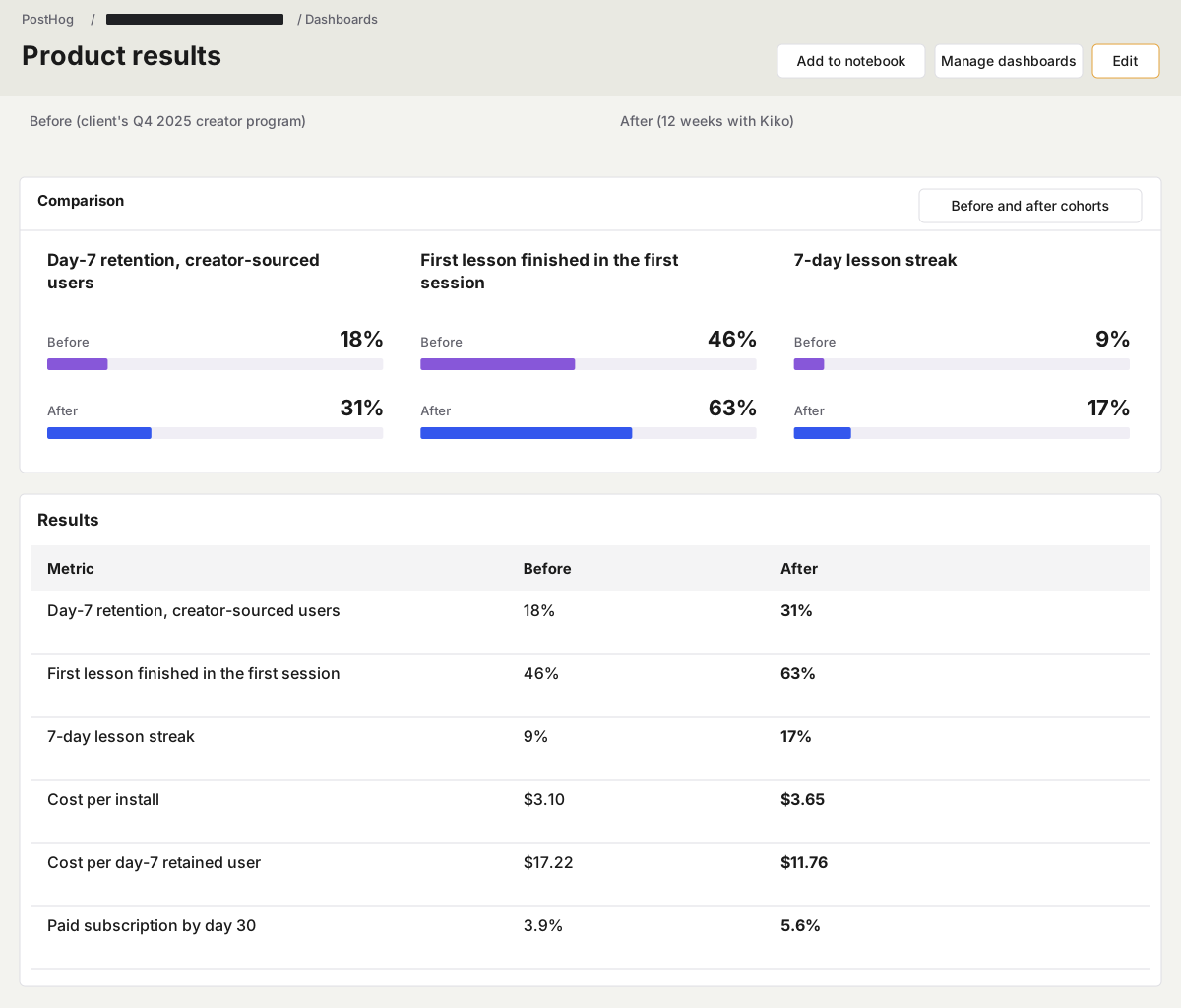
| Metric | Before (client's Q4 2025 creator program) | After (12 weeks with Kiko) | Change |
|---|---|---|---|
| Day-7 retention, creator-sourced users | 18% | 31% | +13 pts |
| First lesson finished in the first session | 46% | 63% | +17 pts |
| 7-day lesson streak | 9% | 17% | +8 pts |
| Cost per install | $3.10 | $3.65 | +18% |
| Cost per day-7 retained user | $17.22 | $11.76 | −32% |
| Paid subscription by day 30 | 3.9% | 5.6% | +1.7 pts |
What didn't work
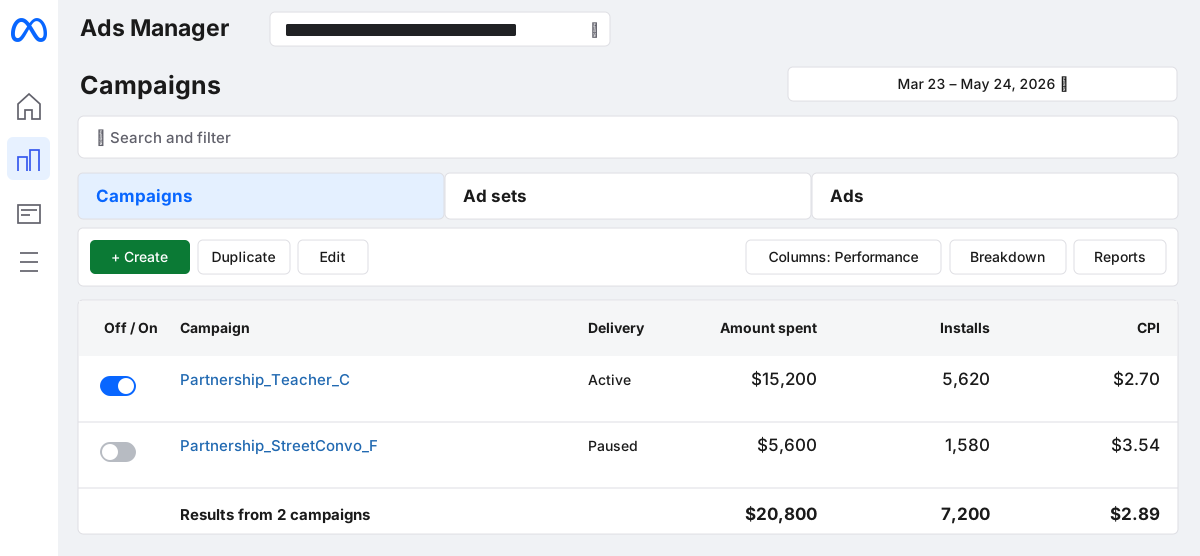
- Street-conversation clips. They brought the cheapest installs, $2.40 each on Spark Ads, but only 20% of those users were learning on day 7. We moved their spend to teacher posts and paused the Meta set in week 9.
- Cost per install went up. Teachers charge more per post and have smaller audiences, so cost per install rose 18%. It paid off in retained users, but the weekly install report looked worse for the first month.
- The age check cost reach. Two of the highest-view teacher accounts were cut because their audiences skewed under 18. We kept the rule and replaced them with smaller teachers.
What we learned
- Judge creators on the retention of their own users, not on installs.
- Book teachers who finish a real lesson in the app on camera.
- Run the audience-age check before outreach, not after a creator is signed.
Frequently asked questions
What does a creator program built for retention cost?
Cost per install rose from $3.10 to $3.65, and cost per day-7 retained user fell from $17.22 to $11.76. Most Series A programs like this run $50,000–$90,000 a month in creator fees and media.
How long before retention improved?
First posts went live in week 3. By weeks 4–6 the read was clear: 64% of lesson-demo users finished a first lesson in session one, against 49% for street clips. Day-7 numbers confirmed it a week after each post.
Would this work for a seed-stage test-prep or coding-course app?
Yes, if a creator can finish a real lesson in your app on camera. Expect install costs to rise; teachers charge more and reach fewer people. Run the audience-age check first: two high-view teacher accounts were cut for under-18 audiences.
Related case studies and guides
Same industry, other angles:
- Paid ads: Cost per paid learner down 44% in 10 weeks on TikTok and YouTube
- Product growth: Day-7 streak rate up from 22% to 39%
- Full growth system: grew paid learners 2.9x in 9 months