The company and program
| Client | A Series B nutrition-coaching app. |
| Stage | Series B |
| Industry | Health and fitness apps |
| Pillars | Creator marketing + Paid ads + Product growth |
| Timeline | 9 months (three 90-day sprints), January–September 2026 |
| Channels | Dietitian, trainer and fitness creators on YouTube, Instagram and TikTok; Meta, TikTok and YouTube ads; trial onboarding, coach check-ins and the cancel flow |
| Team | A dedicated Kiko growth lead plus agents for creator sourcing, claims pre-checks, ad variants, funnel pulls and weekly reporting; the client's registered dietitian lead, counsel and a product engineer |
| Headline result | Grew subscribers from 40,000 to 155,000 in 9 months |
The approach
| Pillar | Hypothesis | Compared against | Decision rule |
|---|---|---|---|
| Creator marketing | Credentialed creators who build a real day of meals with the app bring subscribers who stay longer than "what I eat in a day" creators | "What I eat in a day" lifestyle creators of similar reach | After 30 days, rebook creators under $25 per subscriber with month-2 renewal at or above average |
| Paid ads | Creator meal-building cuts beat the app's own before-and-after-free product ads on cost per subscriber | The app's product-feature ads, same budget | Each concept gets $1,000 or 7 days; scale anything under $40 per subscriber |
| Product growth | A coach check-in on day 3, photo logging and a plan built from the creator's goal raise month-2 renewal | The old onboarding with a generic plan and no check-in | 50/50 split for 8 weeks; ship if month-2 renewal rises 5 points or more at 95% confidence |
How the three pillars connected
Creator marketing
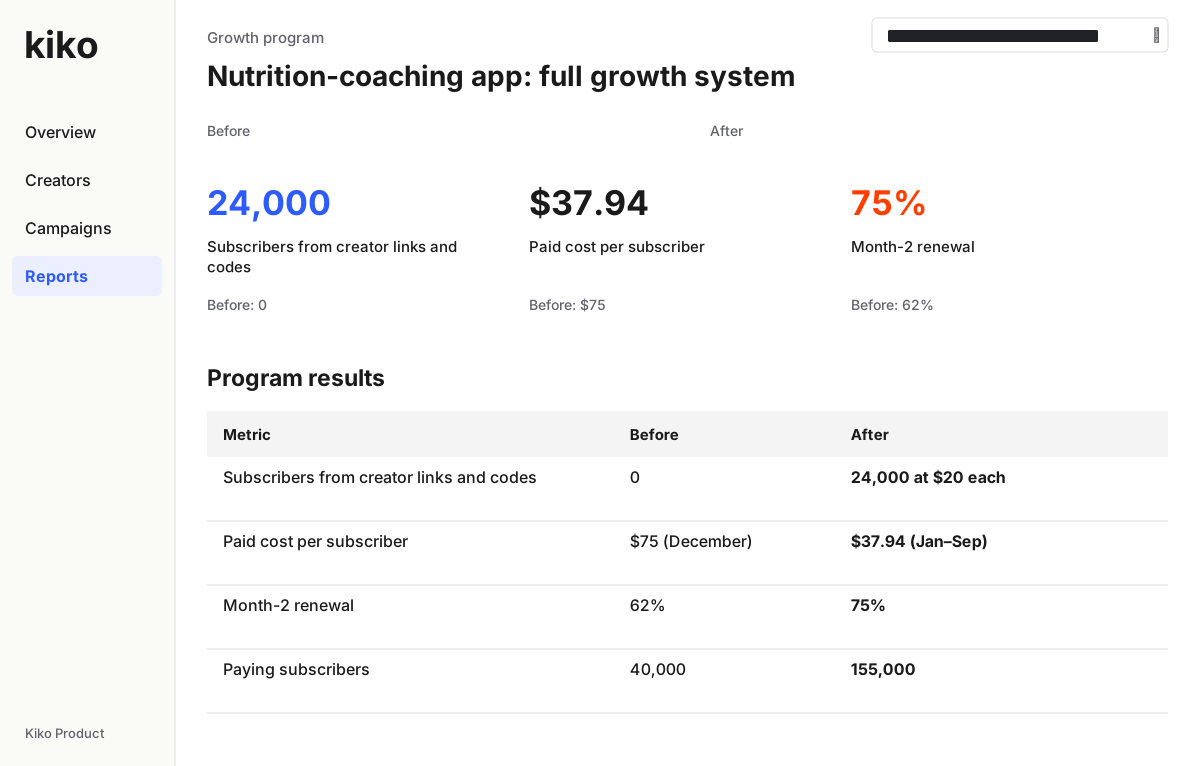
We booked 40 creators over 9 months. The core was registered dietitians and evidence-led trainers: a dietitian YouTuber, an evidence-based lifting channel and a fitness podcast. Each one built a real day of meals with the app. Every script worked only from claims the client could support: no weight-loss promises, no medical claims, and the client's dietitian lead and counsel signed off before filming. Creator links and codes brought 24,000 subscribers at $20 each.
Paid ads
Media scaled from $80,000 to $250,000 a month across Meta, TikTok and YouTube. Paid brought 43,750 subscribers at $37.94 each, against $75 in December. Creator meal-building cuts carried most of the spend by month 3. No health events from the app went to ad platforms; campaigns optimized on trial start and subscription only.
Product growth
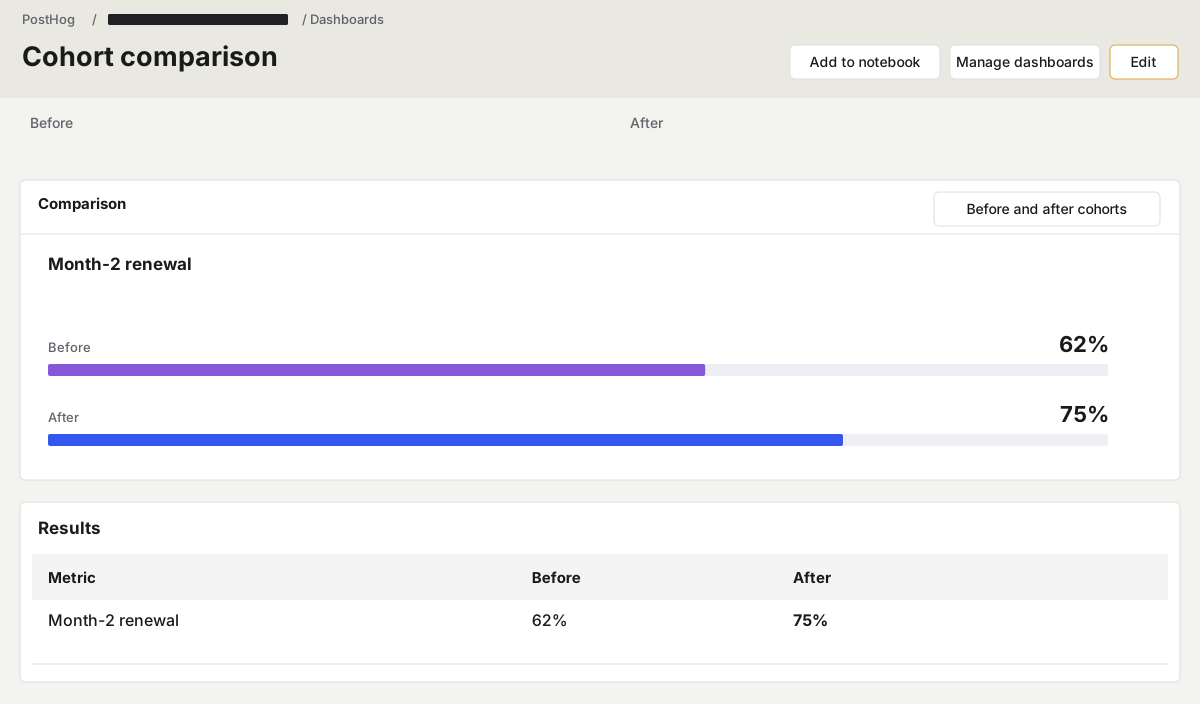
Paid volume showed the retention gap: subscribers who logged on three or more days in their first week renewed at twice the rate of those who didn't, and only 38% did. We added a coach check-in on day 3, photo meal logging, a first plan built from the goal in the creator's video (for example, high-protein), and a pause option in the cancel flow. Logging on 3+ days in week one rose from 38% to 61%, trial-to-paid from 31% to 39%, and month-2 renewal from 62% to 75%.
How they fed each other
Creators showed which goals sold: high-protein and "eat more, not less" plans outperformed weight-focused framing, so paid and onboarding both led with them. The best creator videos became the ads, and the paid audience at volume exposed the first-week habit gap. Once more subscribers renewed, each one was worth more, which let us raise media to $250,000 a month while blended CAC kept falling. Subscribers who came through creators also had the highest month-2 renewal, so we moved creator budget toward the dietitians who drove it.
What we changed
- Weeks 1–2: agree which events may go to ad platforms (trial start and subscription only) and the claims list with the dietitian lead and counsel.
- Weeks 2–5: book the first 12 creators; first videos live in week 3.
- Weeks 3–8: test creator meal-building cuts against product ads on Meta and TikTok, each concept with $1,000 or 7 days.
- Weeks 6–12: find the habit gap (38% log on 3+ days in week one), then A/B test the day-3 check-in and photo logging; ship in week 12.
- Weeks 14–26 (sprint 2): creators to 28, YouTube ads added, first plan built from the creator's goal.
- Weeks 27–39 (sprint 3): final 12 creators, media at $250,000 a month, pause option in the cancel flow.
The results
| Pillar | Metric | Before | After | Change | How measured |
|---|---|---|---|---|---|
| Creator marketing | Subscribers from creator links and codes | 0 | 24,000 at $20 each | +24,000 | Creator links and codes joined to subscriptions |
| Paid ads | Paid cost per subscriber | $75 (December) | $37.94 (Jan–Sep) | −49% | Meta, TikTok and YouTube ads managers, joined to subscriptions |
| Product growth | Month-2 renewal | 62% | 75% | +13 pts | A/B test, then full rollout; subscription data |
| Combined (headline) | Paying subscribers | 40,000 | 155,000 | 3.9x | Subscription system, month end |
What didn't work
- "What I eat in a day" lifestyle creators brought installs but only 24% trial-to-paid, and two scripts had to be rewritten to remove weight-loss claims. We stopped booking them in month 3.
- TikTok was the cheapest paid channel at $32 per subscriber, but its subscribers renewed for month 2 at 68% against 79% from YouTube.
- Cutting the trial from 7 days to 3 lowered trial starts 22% with no gain in paid conversion. We reverted it after four weeks.
What we learned
- Agree the claims list with a dietitian and counsel before the first brief, and book credentialed creators first.
- Lead every pillar with the goal creators prove sells; here, high-protein plans.
- Judge creators and channels on month-2 renewal, not on trial starts.
Frequently asked questions
How much did it cost to grow a nutrition app from 40,000 to 155,000 subscribers?
Each new subscriber cost $14.27 blended, against $23.08 before the program; creators came in at $20 and paid at $37.94.
How quickly did subscriber growth show up?
Creator videos were live in week 3, and creator cuts carried most paid spend by month 3. The first-week rebuild shipped in week 12, and month-2 renewal moved from 62% to 75% before media scaled to $250,000 a month.
Would this work for a seed-stage sleep or fitness app?
The claims process, the credentialed-creator rule and the month-2 renewal test apply to any health subscription. Paid here started at $80,000 a month, more than most seed apps spend, so start with creators and the week-one habit fix.
Related case studies and guides
Same industry, other angles:
- Creator marketing: 14,500 trial starts in 8 weeks; 34% still training at day 30
- Paid ads: Trial-to-paid CAC down from $96 to $58 in 12 weeks
- Product growth: Trial-to-paid conversion up from 34% to 47% after a paywall and onboarding rebuild
Guides and creators: