The company and program
| Client | A seed-stage home workout app. |
| Stage | Seed |
| Industry | Health and fitness apps |
| Timeline | One 90-day growth sprint, July 20 – October 18, 2026. Refunds read through November 1 |
| Channels | iOS and Android app, paywall, push, email |
| Team | A dedicated Kiko growth lead plus agents for event audits, funnel pulls, experiment write-ups and first drafts of paywall and reminder copy. Client side: one mobile engineer, one designer and a certified trainer who owns the workouts |
The approach
We judged every change on install-to-paid, not on trial starts, because a paywall that asks later will always start fewer trials. Every claim on the paywall came from the client's approved claims list, signed off by their counsel.
| Test | Hypothesis | Comparison | Decision rule |
|---|---|---|---|
| Shorter quiz | A 14-screen quiz loses people before they see anything they came for | A 6-screen quiz (goal, level, equipment, time, days, focus area), vs. 14 screens | Ship if onboarding completion rises 5 points or more with install-to-paid flat or up |
| Workout before the paywall | People who have done one workout know what they are paying for | A 7-minute first workout before the paywall, vs. the paywall right after the quiz | Ship if install-to-paid rises, even if trial starts fall |
| Plan paywall | A paywall showing the user's own plan sells better than a feature list | The 4-week plan built from the quiz, a trial timeline (today, reminder on day 5, charge on day 7) and the annual price as $1.15 a week, vs. a feature list | Same rule, with refunds flat or down |
| Trial reminder | An honest reminder before the charge cuts refunds more than it costs in conversions | Push and email 2 days before the first charge, vs. no reminder | Keep if refunds fall by more than any drop in trial-to-paid |
What we changed
- Weeks 1–2: audit and baseline. We fixed subscription events against the app stores' records and pulled the 8 weeks before the sprint. Only 48% of trial users did a single workout during their trial.
- Week 3: 6-screen quiz. Onboarding completion rose first.
- Week 4: workout before the paywall. Trial starts dipped and conversion climbed.
- Week 5: plan paywall. Shipped after a 50/50 split. The 40%-off dismissal offer was tested alongside and dropped.
- Week 7: trial reminder. Shipped to every new trial.
- Weeks 8–12: hold and measure. No new changes. We read each weekly trial cohort at the first charge and 14 days after it, then held the sprint review in week 13.
The results
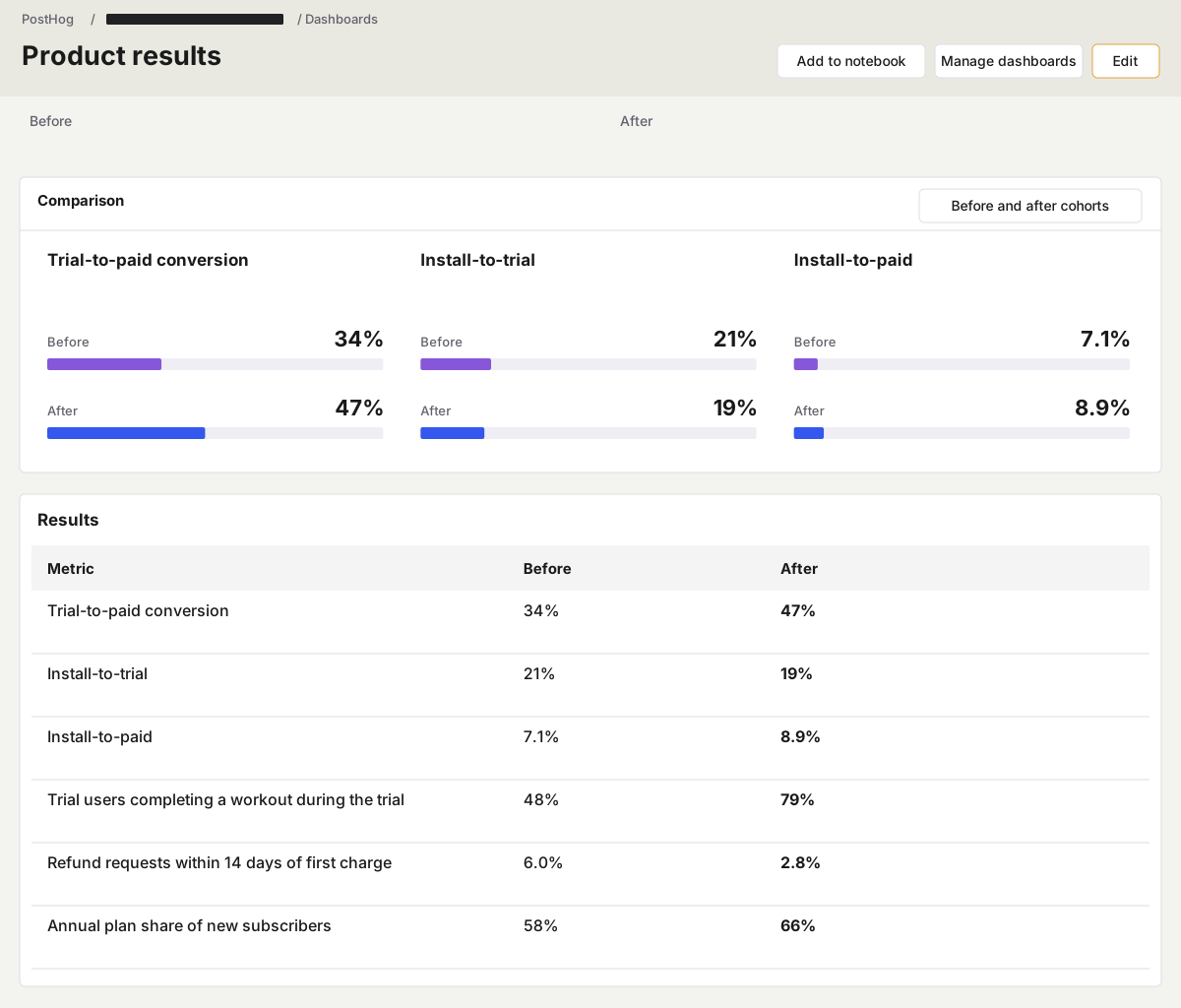
Before: 55,240 installs and 11,600 trials from May 25 – July 19, 2026. After: 41,580 installs and 7,900 trials from sprint weeks 8–12 (September 7 – October 11).
| Metric | Before | After | Change |
|---|---|---|---|
| Trial-to-paid conversion | 34% | 47% | +13 pts |
| Install-to-trial | 21% | 19% | −2 pts |
| Install-to-paid | 7.1% | 8.9% | +1.8 pts |
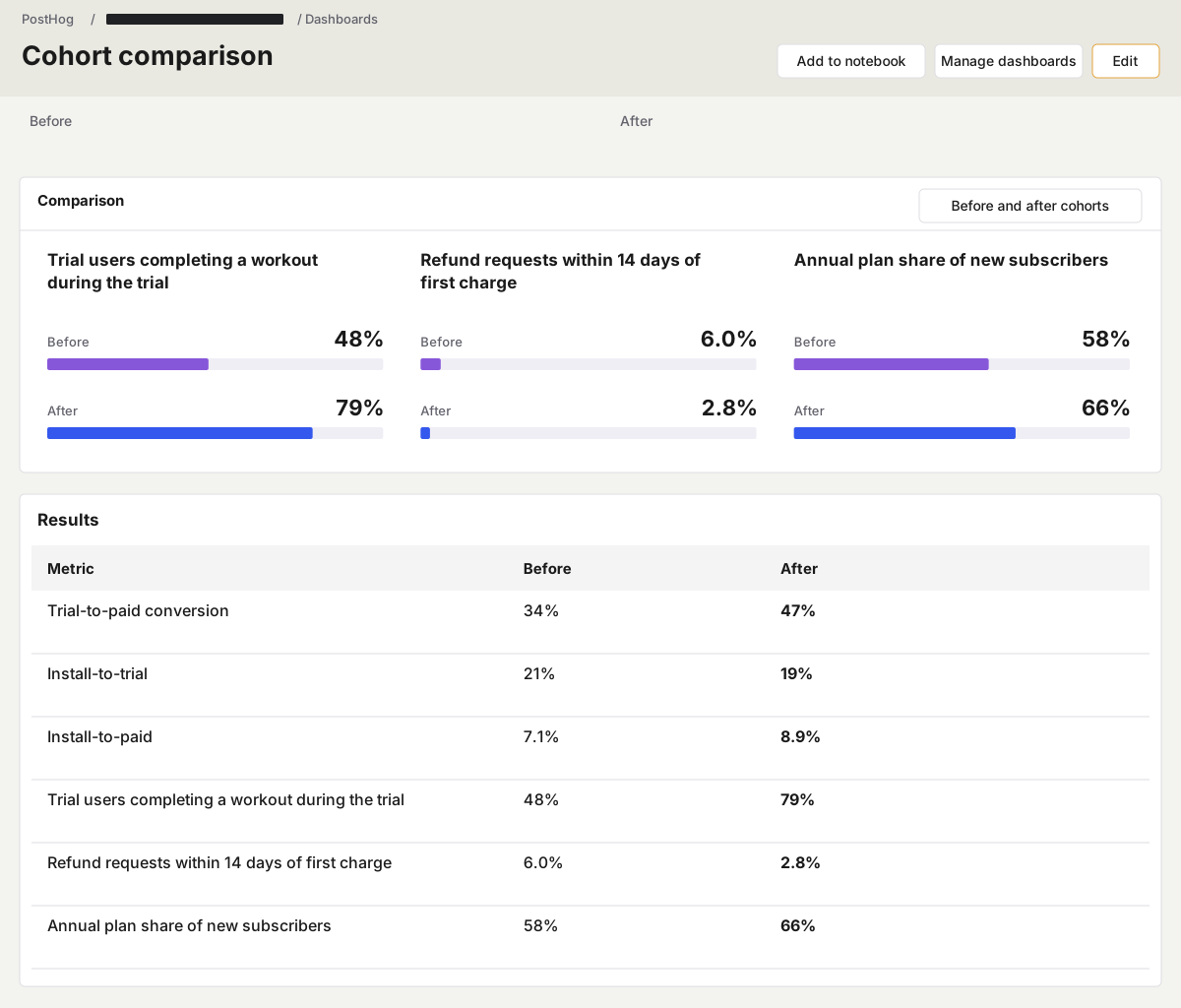
| Trial users completing a workout during the trial | 48% | 79% | +31 pts |
| Refund requests within 14 days of first charge | 6.0% | 2.8% | −3.2 pts |
| Annual plan share of new subscribers | 58% | 66% | +8 pts |
What didn't work
- Install-to-trial fell from 21% to 19%. Fewer people reached the paywall once a workout came first. We accepted it, because install-to-paid rose.
- A 40%-off offer when users closed the paywall. It lifted trial starts, but only 29% of those trials converted, and refunds rose. We dropped it.
- An AI coach chat in onboarding. It made onboarding longer and didn't change trial conversion. We cut it.
What we learned
- Let people do one real workout before asking them to pay.
- Show the user's own plan and the exact date they will be charged.
- Send the trial reminder. In its test week it cost about 1 point of conversion and roughly halved refunds.
Frequently asked questions
How much does a paywall and onboarding rebuild cost with Kiko?
Paid media sat outside the sprint, so the only cost was Kiko's 90-day sprint, priced from $10,000 a month. The client's engineer, designer and trainer built the four changes; Kiko ran the audit, splits and reads. Install-to-paid rose from 7.1% to 8.9%.
How long did the paywall rebuild take to pay off?
Onboarding completion moved in week 3 and conversion climbed from week 4. All four changes were live by week 7. Weeks 8–12 were held with no changes, and refunds were read 14 days after each first charge, through November 1.
Would this work for a Series A sleep or nutrition app, or a monthly-only subscription?
A real first use before the paywall transfers to any health app that can deliver one in minutes. The $1.15-a-week framing needs an annual plan; here annual share went from 58% to 66%. Paywall health claims still need counsel sign-off.
Related case studies and guides
Same industry, other angles:
- Creator marketing: 14,500 trial starts in 8 weeks; 34% still training at day 30
- Paid ads: Trial-to-paid CAC down from $96 to $58 in 12 weeks
- Full growth system: grew subscribers from 40,000 to 155,000 in 9 months