The company and program
| Fact | Detail |
|---|---|
| Client | A seed-stage sales-intelligence tool |
| Stage | Seed |
| Industry | GTM tools |
| Timeline | One quarter, July 1 – September 30, 2026 |
| Channels | Sponsorships with 3 newsletters, a sales podcast with a YouTube channel, an AE-focused YouTube channel and a founder podcast. No paid media |
| Team | 1 dedicated Kiko growth lead, plus agents for creator sourcing, tracking setup and weekly pipeline reporting |
The approach
- Hypothesis: Creators whose audience is the sales buyer (AEs, sales leaders and RevOps) produce qualified pipeline at under half the cost of LinkedIn ads.
- Comparison: A newsletter pilot against a podcast and YouTube pilot, 3 creators each and 3 placements per creator. Both against the prior quarter's LinkedIn ads: 13 qualified opportunities at $3,460 each.
- Decision rule: Decide at day 90 on cost per qualified opportunity. A demo counted for a creator when it came through their link, their promo code or the demo form's "how did you hear about us" answer. Rebook creators at $2,000 or less per qualified opportunity; drop any creator above $3,460.
What we changed
- Weeks 1–2: shortlist and tracking. Scored 60 sales, RevOps and GTM creators on Kiko's creator-fit rubric, contacted 14 and signed 6: sales-tactics shows for AEs and sales leaders and GTM newsletters that run sponsored issues. Set up a UTM link and promo code per creator and made "how did you hear about us" a required field on the demo form.
- Week 3: newsletter pilot starts. Three newsletters ran their first sponsored issue, with the next two spaced 2 weeks apart.
- Week 5: podcast and YouTube pilot starts. The second pilot ran 2 weeks behind the first, so each read could be judged on its own.
- Weeks 6–12: placements 2 and 3. Pipeline was reviewed weekly with the client's head of sales, and sales followed up every creator-sourced demo within one business day.
- Week 13: day-90 decision. Rebooked 5 creators for Q4 and dropped the founder podcast.
The results
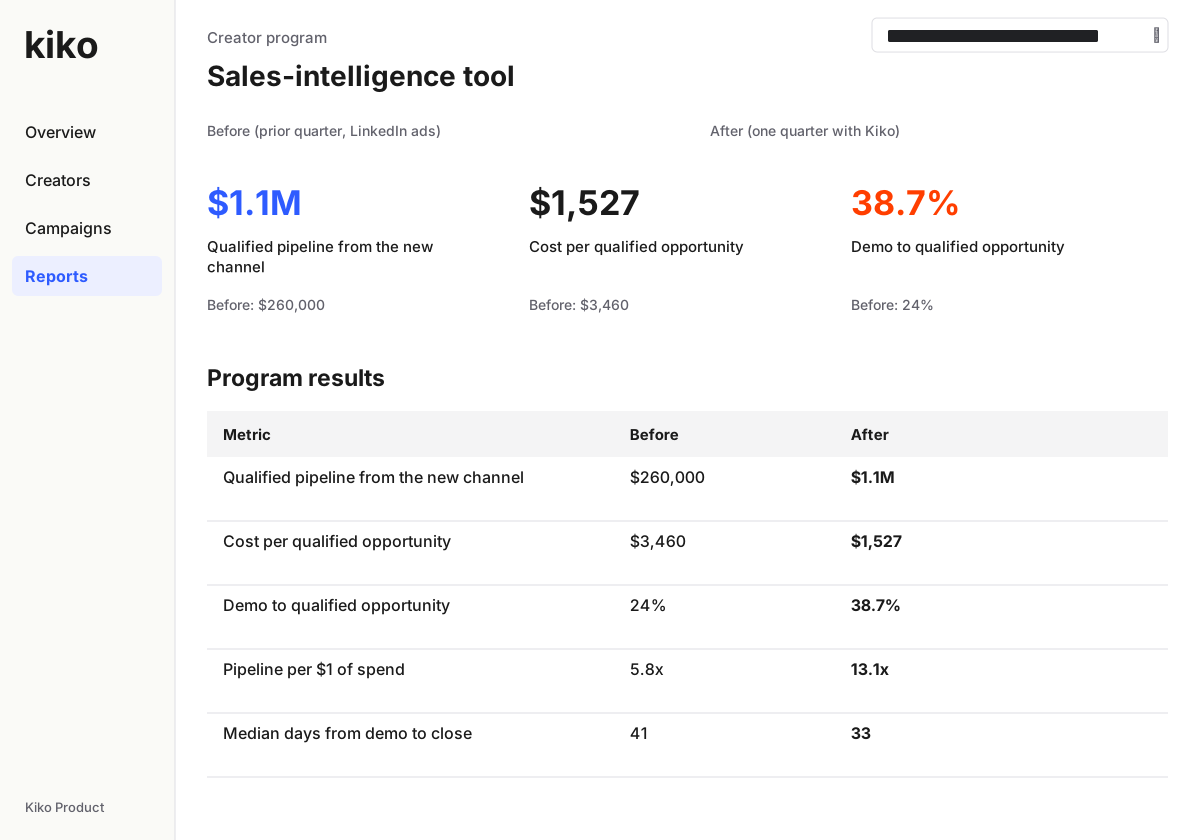
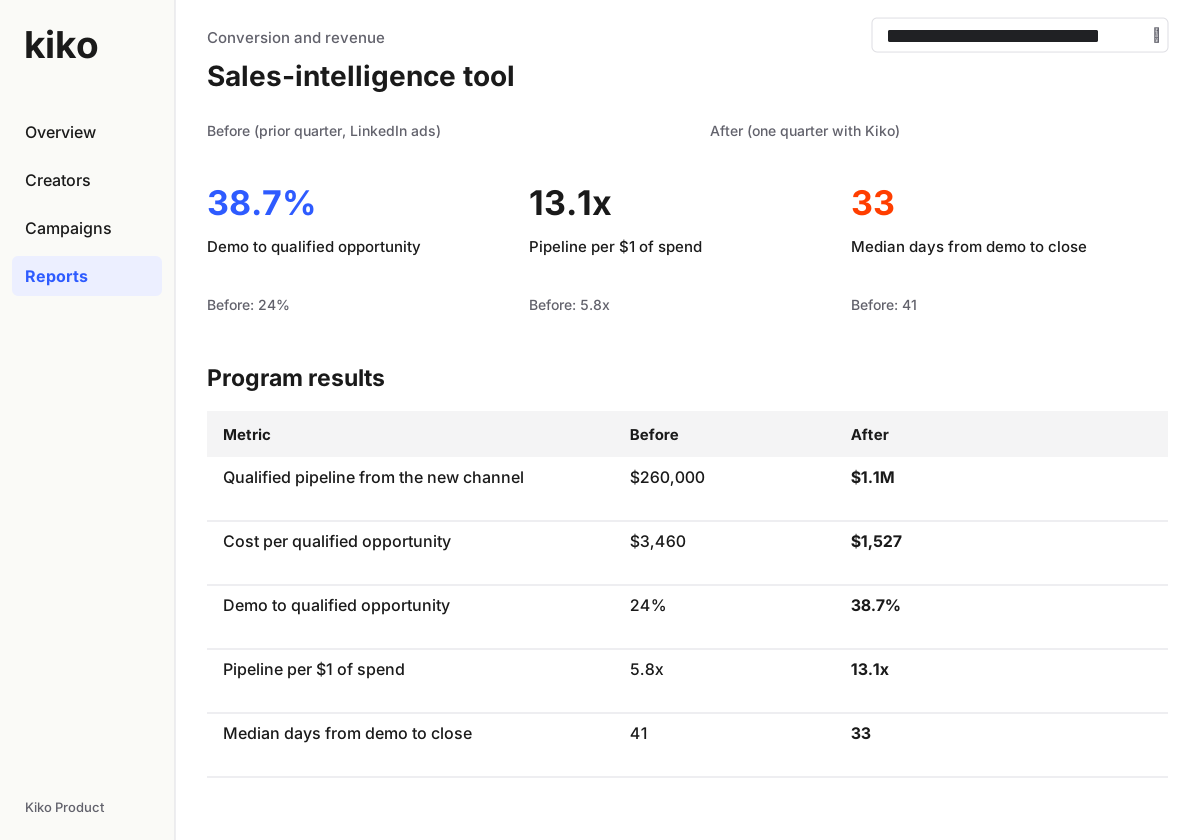
| Metric | Before (prior quarter, LinkedIn ads) | After (one quarter with Kiko) | Change |
|---|---|---|---|
| Qualified pipeline from the new channel | $260,000 | $1.1M | 4.2x |
| Cost per qualified opportunity | $3,460 | $1,527 | −56% |
| Demo to qualified opportunity | 24% | 38.7% | +14.7 pts |
| Pipeline per $1 of spend | 5.8x | 13.1x | 2.3x |
| Median days from demo to close | 41 | 33 | −8 days |
What didn't work
- The founder podcast. Its audience was founders and product leaders, not sales buyers. It brought 9 demos and 2 qualified opportunities: $5,000 per qualified opportunity, above the drop line.
- AE-focused YouTube reached reps, not budget holders. Its 13 demos were mostly individual AEs who could not buy a team plan. It landed at exactly $2,000 per qualified opportunity, so we kept it for one more package with a manager-focused script.
- Attribution leaned on self-report. 38% of creator-sourced demos were credited only through the demo form answer, mostly from podcast listeners. Without that required field, the podcast pilot would have looked half as good.
What we learned
- Run small, staggered pilots of 3 creators and decide at day 90, not after the first read.
- Make "how did you hear about us" a required demo-form field before the first placement.
- Pick creators by the buyer's job title, not by audience size.
Frequently asked questions
How much do B2B newsletter and podcast sponsorships cost for a sales tool?
Judge it by unit cost: across 6 creators and 18 placements, each qualified opportunity cost $1,527 and pipeline came to 13.1x the fees, with no paid media. Most seed programs like this run $15,000–$35,000 a month in sponsorship fees.
How long before creator sponsorships show up in pipeline?
The first newsletter ran in week 3 and the podcast pilot started in week 5, so the rebook decision waited until day 90. Median demo to close was 33 days, and 9 deals worth $171,000 closed inside the quarter.
Would this work for a Series A GTM tool selling to founders instead of sales teams?
Only with different creators. The founder podcast on this program reached founders and product leaders and cost $5,000 per qualified opportunity, above the drop line. The staggered-pilot structure transfers; the creator list does not.
Related case studies and guides
Same industry, other angles:
- Paid ads: a seed-stage AI outbound tool, $780K in qualified pipeline in 90 days from LinkedIn and Meta retargeting
- Product growth: a seed-stage sales engagement tool, Trial-to-paid conversion up from 9% to 17%
- Full growth system: a Series A revenue intelligence platform grew new ARR per quarter from $600K to $2.3M