The company and program
| Client | A Series A AI journaling app for iOS and Android: speak or type for three minutes, and the AI asks follow-up questions and writes the entry. |
| Stage | Series A |
| Industry | Consumer AI apps |
| Timeline | 12 weeks of buying (three monthly cohorts), each read at day 60 |
| Channels | TikTok Spark Ads and in-feed ads; Meta partnership ads and Reels |
| Team | A Kiko growth lead and a paid media buyer, plus agents for creative tagging, daily spend checks and cohort reporting |
The approach
- Hypothesis: a creator speaking a real entry sells the habit better than a list of features, and optimizing to trial start finds people who go on to pay.
- Comparison: creator-made ads (a night routine, "three questions before bed", voice to written entry) run as Spark Ads and partnership ads, against the app's own screen-recording feature ads. Trial-start optimization against install optimization.
- Decision rule: each concept got 7 days or $1,000, whichever came first, judged on cost per trial. Concepts more than 30% above the best were cut. Monthly spend rose only when the previous cohort's 7-day ROAS was on track for 1.0x by day 60.
What we changed
- Weeks 1–2: creators and rules. We booked 10 creators who already journal, each with 80% or more of their audience aged 18+, to film a real entry. The base fee included 90 days of paid usage. No script or ad claimed therapy, diagnosis or a mental-health outcome, and every ad targeted 18+.
- Weeks 1–2: optimization. Campaigns moved from install to trial start, with trial and subscription events sent server-side. An install-optimized campaign ran alongside as a control.
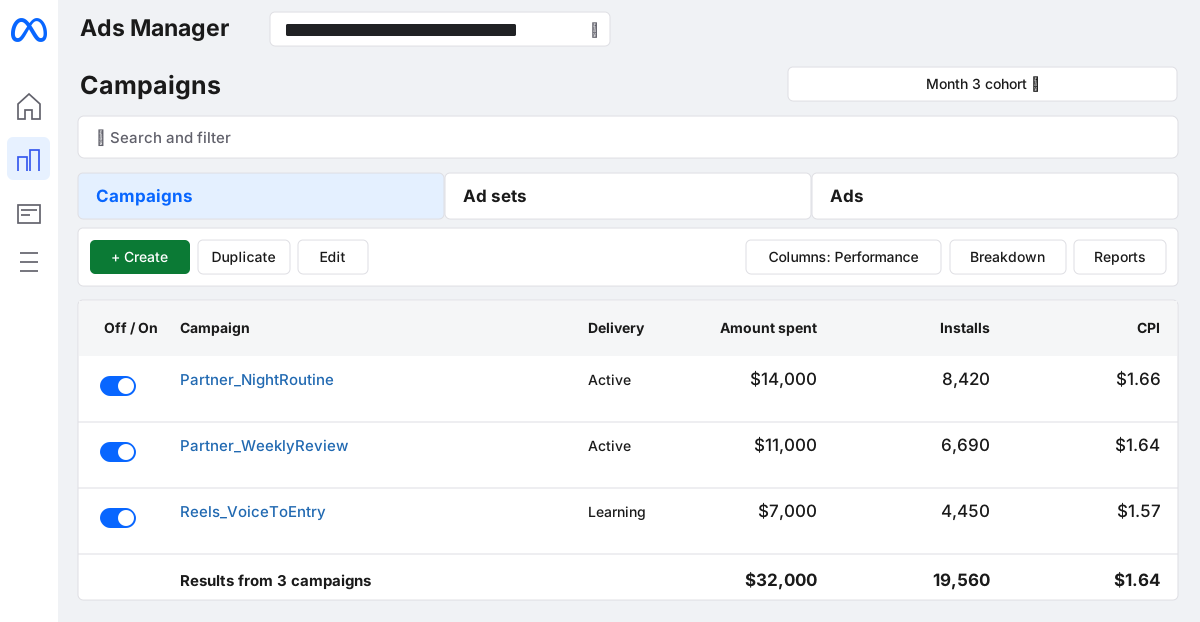
- Weeks 3–6: tests. We tested 18 creator concepts on both platforms and paused the feature ads. The paywall's default moved to the annual plan in week 5.
- Weeks 7–12: scale. Three formats carried the budget on both platforms: the night routine, the three questions and voice to entry. Four new creator videos went in every two weeks, and spend reached $70K a month in month 3.
The results
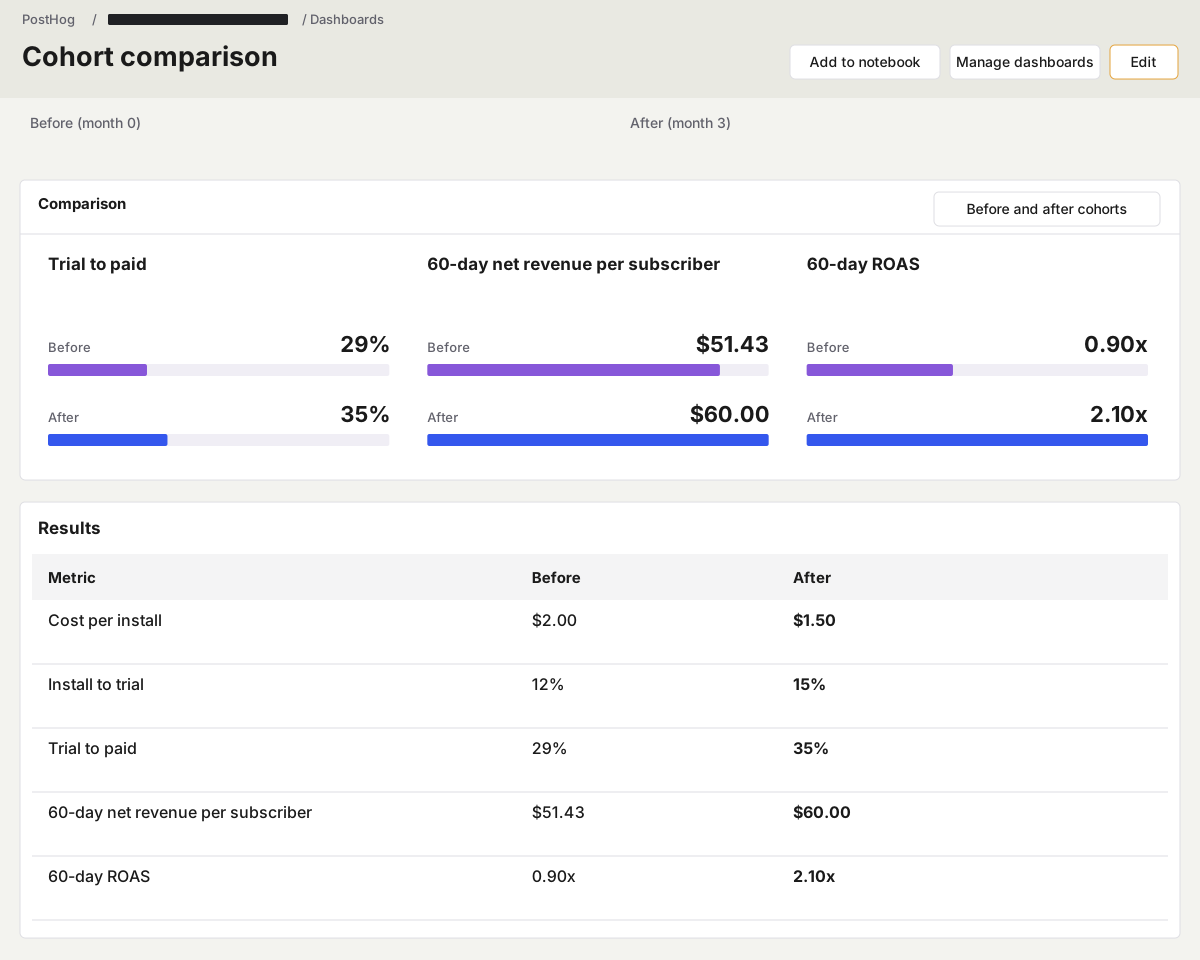
| Metric | Before (month 0) | After (month 3) | Change |
|---|---|---|---|
| Cost per install | $2.00 | $1.50 | −25% |
| Install to trial | 12% | 15% | +3 pts |
| Trial to paid | 29% | 35% | +6 pts |
| 60-day net revenue per subscriber | $51.43 | $60.00 | +17% |
| 60-day ROAS | 0.90x | 2.10x | +1.20x |
Meta returned 2.22x and TikTok 2.00x in month 3. Every cohort under Kiko passed 1.0x before day 60: 1.30x in month 1, 1.70x in month 2 and 2.10x in month 3.
What didn't work
- Install optimization. The control campaign bought installs at about $1.10, but only 6% started a trial. It was switched off after two weeks.
- Mood videos without a voice. Calm, music-only journaling clips held attention but had the lowest trial rate of any format. They were cut at their first review.
- Not all of the lift came from ads. The annual-plan default drove most of the 17% rise in 60-day revenue per subscriber. Creative and optimization drove the gains in cost per install and trial rate.
What we learned
- Optimize to trial start from the first day of spend.
- Brief creators to record a real entry, start to finish, in their own words.
- Read every monthly cohort at day 7, 30 and 60 before raising the budget.
Frequently asked questions
How much does it cost to run TikTok and Meta ads for a consumer AI app?
By month 3, installs cost $1.50, trials $10.00 and each paid subscriber $28.57, against $2.00, $16.67 and $57.14 in the month before kickoff.
How long until paid social pays back?
Each cohort here passed 1.0x within 60 days of install: 1.30x in month 1, 1.70x in month 2, 2.10x in month 3. Spend rose only after the prior cohort's day-7 read was on track.
Would this work for a seed-stage AI app with no free trial?
Not as run. The whole program optimized to trial start, judged concepts on cost per trial, and moved the paywall default to the annual plan. Without a trial event, you need a different optimization event and a different test metric.
Related case studies and guides
Same industry, other angles:
- Creator marketing: 48,000 installs in 9 weeks at a blended $1.42 CPI
- Product growth: Day-30 retention up from 12% to 21%
- Full growth system: reached 250,000 monthly active users in 7 months